Most businesses can survive a mediocre cleaning program. A gym can’t. Members are barefoot in the shower, face-down on a mat, and gripping handles that fifty other people gripped that day — which makes cleanliness less of a background expense and more of a core part of what they’re paying for.
It also shows up where it hurts. Read the one-star reviews of almost any fitness facility and the same words appear: the locker room, the smell, the equipment nobody wipes down. Those reviews cost far more than the cleaning contract that would have prevented them.
For gyms, studios, and fitness facilities across Harrisburg, Hershey, Lebanon, and Palmyra — independent clubs, boutique studios, apartment and hotel fitness rooms, and corporate wellness centers — a professional cleaning program handles the parts that in-house staff realistically can’t get to between classes and shift changes.
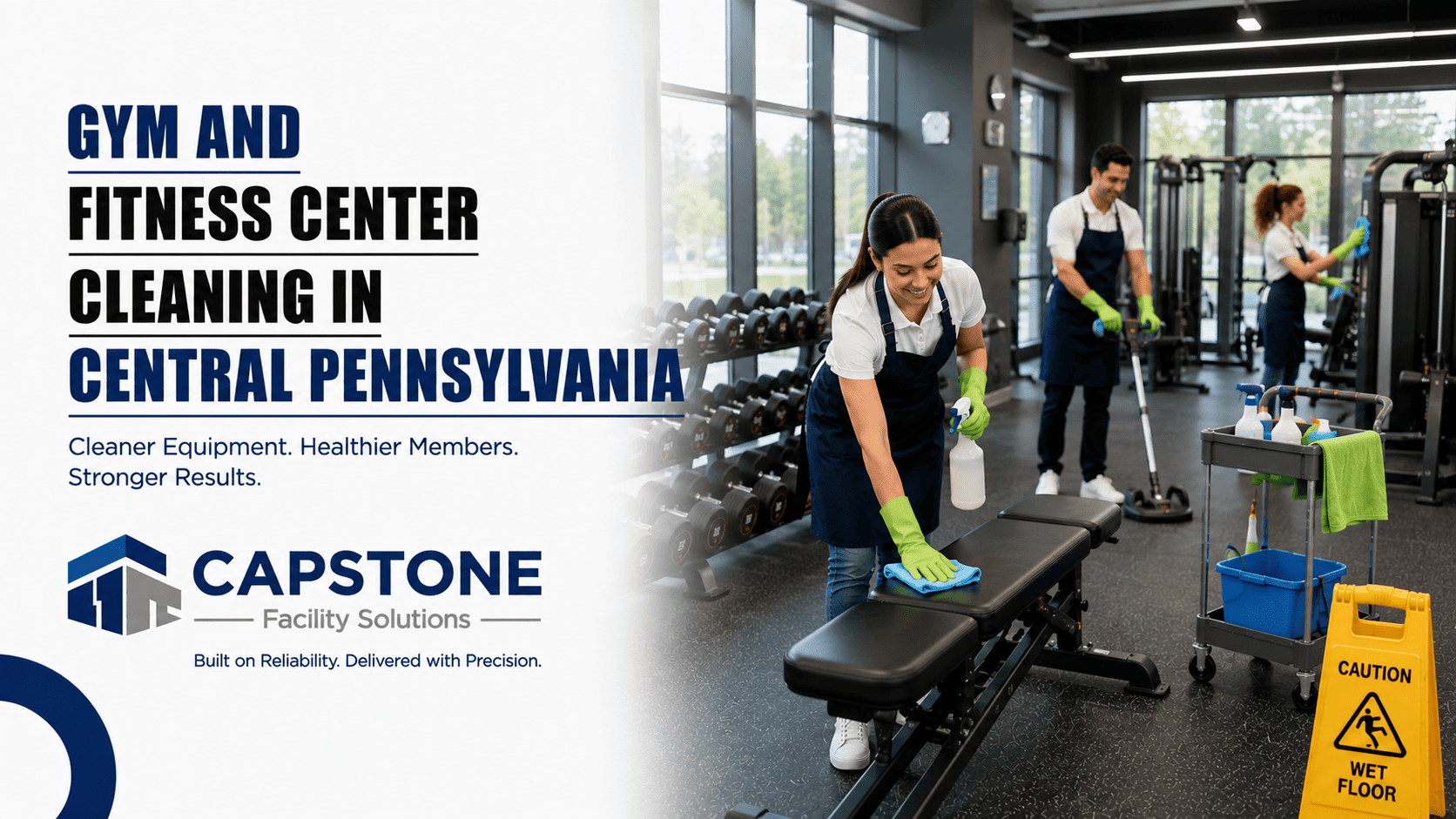
Members are told to wipe down machines, and some of them do. That’s a supplement to a cleaning program, not a substitute for one — spray bottles and paper towels don’t reach the parts that actually accumulate grime.
A professional equipment routine covers:
Product matters more here than almost anywhere else. Many disinfectants degrade vinyl upholstery, and repeated use of the wrong chemistry cracks and discolours bench pads — an expensive form of damage that shows up months later. Equipment manufacturers publish cleaning specifications, and a contractor working in a gym should be following them rather than using the same product they use on desks.
The other half is technique: EPA-registered disinfectants only work if the surface stays wet for the labelled contact time. A quick wipe that evaporates in ten seconds hasn’t disinfected anything.
Locker rooms generate more complaints than every other area of a fitness facility combined. They combine heat, humidity, bare feet, and heavy turnover — a difficult environment that punishes any gap in the routine.
A thorough locker room program includes:
Frequency is the variable that matters. A locker room cleaned thoroughly once at 5am and not touched again is unacceptable in a facility running from 5am to 10pm — which is why most gyms need daytime coverage in addition to a nightly deep clean.
Showers are where the consequences of poor cleaning become health issues rather than aesthetic ones. Constant moisture and warmth make them the highest-risk area in the building.
Shower cleaning covers:
Mold prevention is mostly about drying, not scrubbing. Squeegeeing surfaces after cleaning, keeping drains clear, ensuring ventilation runs, and addressing standing water are what prevent recurrence. A facility that scrubs mold off weekly without fixing the moisture cycle is treating the symptom.
Any persistent mold, chronic standing water, or ventilation failure should be reported to management immediately — those are building maintenance issues, not cleaning issues, and no cleaning schedule will out-run them.
Fitness facilities run more flooring types in one building than almost any other commercial space, and each needs different handling:
Mats deserve particular attention. They’re often the least consistently cleaned surface in a gym and the one with the most direct skin contact.
Beyond equipment, a fitness facility concentrates shared touch points densely:
These get missed because they aren’t equipment and aren’t locker rooms — they belong to no one’s mental checklist, which is exactly why they need to be on a written one.
Gym smell is the complaint members mention most and facilities address least effectively, largely because air fresheners are treated as the solution rather than a cover-up.
Odor is a symptom. The actual sources:
Fixing it means removing the source — deep cleaning soft surfaces, keeping drains clear and flushed, managing laundry and waste on a tighter cycle, and ensuring ventilation actually runs. Masking agents on top of an untreated source produce a smell members recognise immediately and dislike more than the original.
Studios turn over multiple times a day with high-intensity use in an enclosed space:
Spin studios need particular attention — bikes accumulate sweat and corrode over time, and manufacturers publish specific cleaning guidance worth following.
Most fitness facilities have no real closed window, which is the central scheduling challenge:
For 24-hour facilities, the work happens around members rather than after them, which requires crews comfortable working in occupied space — a different skill from cleaning an empty office.
Gym memberships are cancelled quietly. Members don’t complain and then leave — they mostly just stop coming, and the cancellation follows a few months later.
Cleanliness is one of the most consistent reasons cited when they do explain, and it dominates negative reviews of fitness facilities. A prospective member reading reviews before a tour has usually already seen the locker room comments.
The economics are straightforward. Retaining an existing member is far cheaper than acquiring a new one, and the cost of a thorough cleaning program is small against the membership revenue lost to a locker room that develops a reputation. In a category where competitors are often within a few miles and price differences are modest, facility condition is one of the few genuine differentiators available.
There’s a health dimension as well. Shared equipment, mats, and wet floors are exactly the surfaces where skin and fungal infections spread in fitness settings. Consistent disinfection with correct products and correct contact times is meaningful risk reduction, not just presentation.
We build the scope around your facility’s actual layout and hours rather than a generic checklist, use products appropriate to the surfaces involved — including manufacturer-compliant chemistry on equipment upholstery — and observe disinfectant contact times rather than wiping and moving on. Every team member is background-checked and trained before working in an occupied facility, and we carry general liability and workers’ compensation coverage.
For facilities inside larger buildings — apartment complexes, hotels, corporate campuses, medical and physical therapy practices — fitness room cleaning can be folded into the wider building program rather than handled as a separate vendor relationship.
Equipment should be disinfected daily at minimum, with high-touch surfaces like cardio handles, consoles, and bench pads addressed more frequently in busy facilities. Member wipe-down stations supplement a professional routine but don’t replace it.
EPA-registered disinfectants compatible with the equipment surfaces involved. Many common disinfectants degrade vinyl upholstery over time, so equipment manufacturer cleaning specifications should be followed to avoid cracking and discolouration of bench pads and seats.
Primarily by controlling moisture rather than by scrubbing more often — squeegeeing surfaces after cleaning, keeping drains clear, ensuring ventilation runs, and eliminating standing water. Persistent mold usually indicates a ventilation or drainage problem that cleaning alone will not resolve.
Locker rooms need a thorough clean at least daily, plus daytime checks and restocking during operating hours. A facility open from early morning to late evening cannot rely on a single overnight visit.
By removing the source rather than masking it — deep cleaning mats, upholstery and turf, clearing and flushing drains, managing laundry and waste on a tight cycle, and confirming ventilation is working. Air fresheners over an untreated source make the problem more noticeable, not less.
Yes. Most fitness facilities use an overnight or off-peak deep clean plus daytime coverage during operating hours. For 24-hour facilities, crews work around members in occupied space.
Yes. Fitness rooms inside apartment complexes, hotels, corporate campuses, and medical facilities are commonly included in the wider building cleaning program rather than contracted separately.
Every fitness facility has a different mix of equipment, flooring, wet areas, and operating hours — which is what determines the right scope and schedule.
Call Capstone Facility Solutions at 717-298-7157 to schedule a free on-site assessment and receive a cleaning plan built around your facility’s hours and layout.
Tell us about your facility and we will send a custom, no-obligation price — usually within a day.