Maintaining a clean commercial facility isn’t just about creating a positive first impression—it’s also an important part of meeting workplace safety, health, and regulatory requirements. Businesses across Pennsylvania are expected to provide employees and visitors with a clean, safe environment that supports productivity and reduces potential hazards.
Whether you manage an office, warehouse, medical facility, school, retail store, or manufacturing plant, understanding Pennsylvania commercial cleaning regulations can help you remain compliant while protecting your employees, customers, and business reputation. Below are some of the most important commercial cleaning regulations and best practices every Pennsylvania business should know.
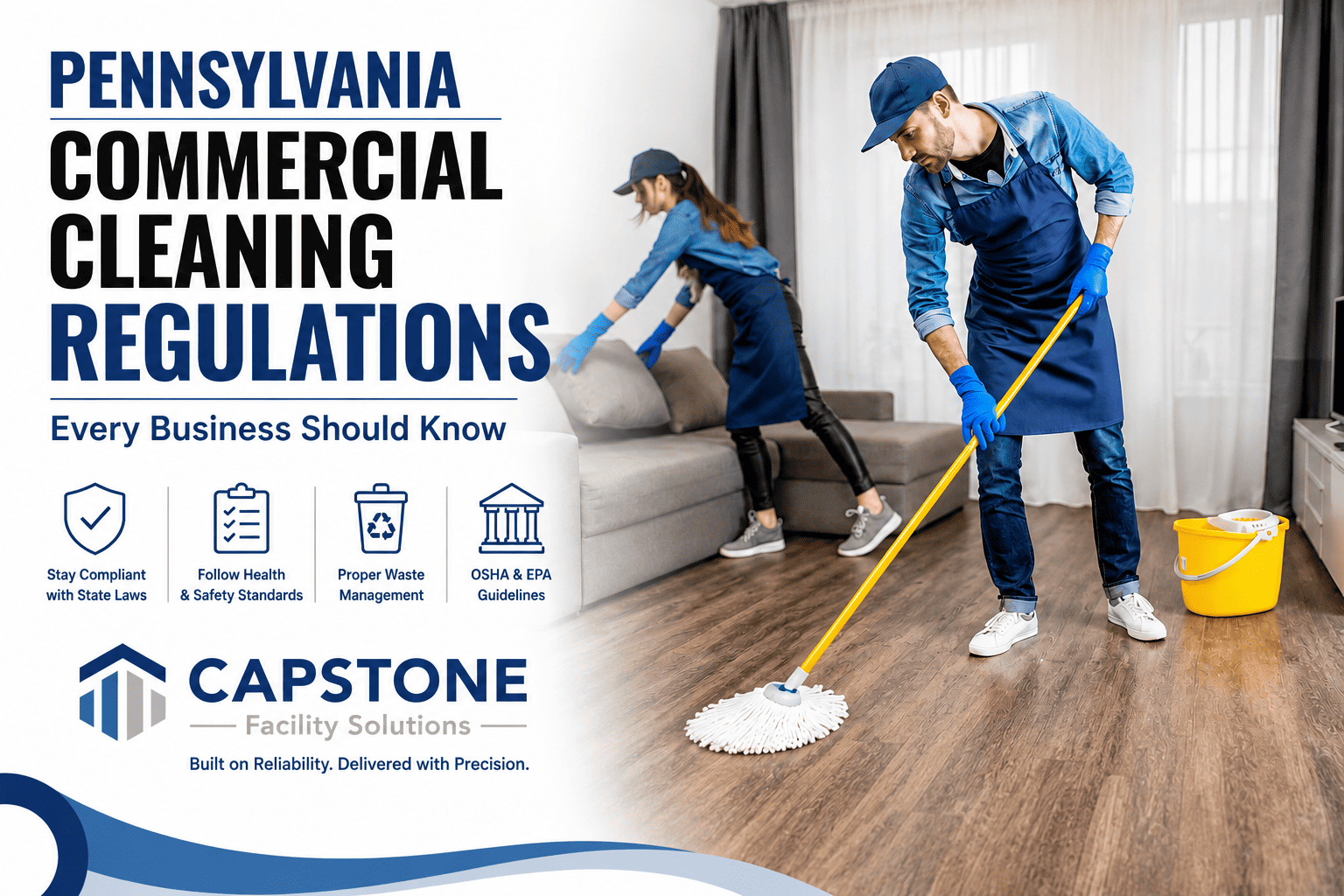
One of the primary regulations affecting commercial cleaning is compliance with Occupational Safety and Health Administration (OSHA) standards.
Businesses should maintain workspaces that minimize hazards by:
Routine commercial cleaning helps businesses meet OSHA expectations while creating a safer workplace for employees. The full requirements are laid out in OSHA’s general workplace sanitation standard, 29 CFR 1910.141, which covers housekeeping, restroom maintenance, and waste disposal in detail.”
Commercial cleaning products must be used and stored responsibly. Pennsylvania businesses should ensure that:
Following these practices reduces workplace accidents and supports regulatory compliance. These requirements stem from OSHA’s Hazard Communication Standard, which mandates SDS availability, proper labeling, and employee training for anyone handling hazardous chemicals on the job.
Poor indoor air quality can affect employee health, productivity, and customer comfort. Professional cleaning helps improve air quality by reducing:
Regular vacuuming with HEPA filtration and dust removal contributes to a healthier indoor environment.
Clean restrooms are essential for employee health and customer satisfaction. Commercial restroom cleaning typically includes:
Routine restroom maintenance helps reduce the spread of germs while supporting workplace hygiene standards.
Frequently touched surfaces can become breeding grounds for bacteria and viruses. Businesses should regularly disinfect:
Consistent disinfection helps reduce illness and supports a healthier workplace.
Certain industries must follow additional sanitation standards beyond general commercial cleaning. Examples include:
Cleaning programs should be customized to meet industry-specific regulations and operational needs.
Proper waste handling is another important compliance consideration. Businesses should:
Good waste management helps improve cleanliness while reducing health and safety risks.
Cleaning procedures should also protect employees performing the work. Professional cleaning companies typically follow safety practices such as:
These measures help reduce workplace accidents and maintain a safe cleaning process.
Keeping records of routine cleaning activities can demonstrate your commitment to maintaining a safe facility. Businesses often benefit from maintaining:
Documented cleaning procedures can simplify facility management and support compliance efforts during inspections.
Understanding regulations is only part of maintaining a compliant workplace. Consistent, professional cleaning helps businesses stay ahead of potential issues by reducing hazards, maintaining sanitation standards, and creating a healthier environment for employees and visitors.
A professional commercial cleaning company develops customized cleaning plans based on your facility type, occupancy levels, and industry requirements, helping you maintain cleanliness while supporting regulatory expectations.
Capstone Facility Solutions provides professional commercial cleaning services throughout Central Pennsylvania. Our experienced team understands the cleaning standards businesses must meet and develops customized cleaning programs tailored to your facility’s operations.
From office buildings and warehouses to retail stores and medical facilities, we use commercial-grade equipment and proven cleaning methods to help businesses maintain safe, clean, and compliant work environments.
Most businesses must comply with OSHA workplace safety standards, proper chemical handling procedures, sanitation practices, and industry-specific cleaning requirements depending on their operations.
While regulations typically require businesses to provide safe and sanitary workplaces rather than mandate professional cleaning, hiring a commercial cleaning company is an effective way to maintain compliance.
Cleaning frequency depends on your industry, building occupancy, and daily operations. Many businesses schedule daily, weekly, or customized recurring cleaning services.
Proper storage, labeling, employee training, and the use of Safety Data Sheets (SDS) help reduce workplace hazards and support OSHA compliance.
Yes. Experienced commercial cleaning providers understand industry best practices and can create cleaning programs that support workplace safety, sanitation, and regulatory compliance.
Keeping your business clean isn’t just about appearance—it’s an important part of maintaining workplace safety and meeting commercial cleaning standards. Capstone Facility Solutions provides customized commercial cleaning services designed to help Pennsylvania businesses maintain cleaner, healthier, and more compliant facilities.
Call Capstone at 717-298-7157 to schedule your free on-site consultation and receive a customized commercial cleaning plan tailored to your business.
Tell us about your facility and we will send a custom, no-obligation price — usually within a day.