Keeping your workplace clean is essential for maintaining a safe, healthy, and professional environment. Whether you operate an office, retail store, warehouse, medical facility, or industrial building, commercial cleaning services help protect employees, impress customers, and maintain your property.
Many business owners also ask an important financial question: Is commercial cleaning tax deductible for businesses? In many cases, commercial cleaning expenses may qualify as ordinary and necessary business expenses. However, whether a specific expense is deductible depends on your business circumstances, applicable tax laws, and proper documentation.
Understanding how these expenses are generally treated can help you budget more effectively and prepare accurate financial records. As tax rules vary by jurisdiction and business structure, it’s always advisable to consult a qualified tax professional regarding your specific situation.
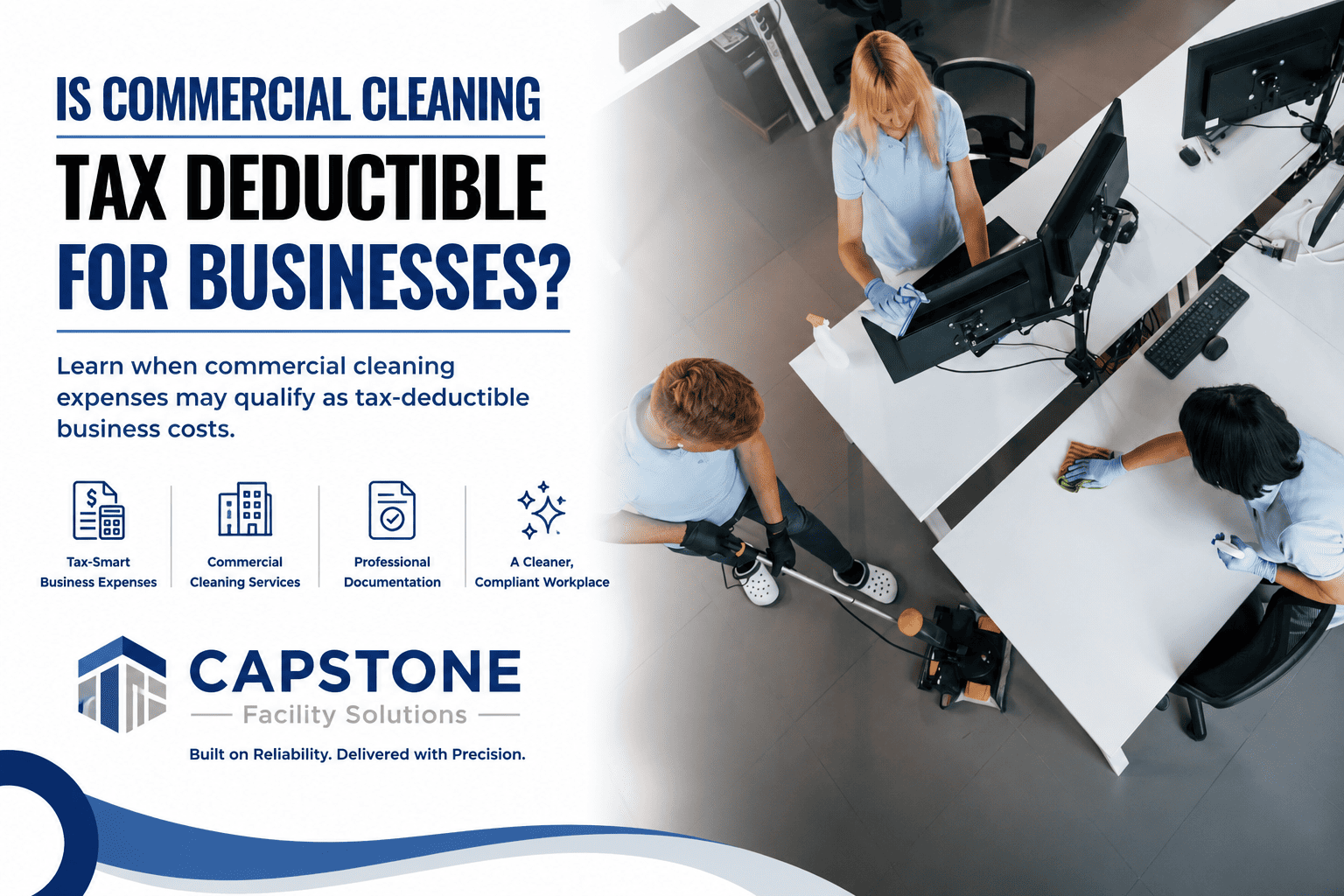
Commercial cleaning expenses generally include professional cleaning services performed to maintain a business property. Common examples include:
These services help businesses maintain a clean, safe, and functional workplace throughout the year.
Business expenses are generally expected to be ordinary and necessary for operating your business.The IRS defines this standard in Publication 535, Business Expenses, which outlines what qualifies as an ordinary and necessary cost of running a business.” Since maintaining a clean workplace supports employee health, customer experience, and daily operations, commercial cleaning services are commonly treated as an operating expense. Examples include:
The deductibility of these expenses depends on your business records and applicable tax regulations.
Proper documentation is essential when claiming business expenses. Keep records such as:
Well-organized documentation helps support your business expenses if questions arise during tax preparation or an audit.
Routine commercial cleaning is different from building renovations or major property improvements. For example:
Routine Maintenance
Property Improvements
Understanding the difference helps ensure expenses are categorized correctly within your business records. The IRS draws this same line in its tangible property regulations, which distinguish routine maintenance from capital improvements that must be depreciated instead of deducted immediately.
Professional commercial cleaning provides more than a clean appearance. Benefits include:
Regular cleaning can also help reduce long-term maintenance costs by preventing excessive dirt buildup and premature wear.
Many businesses debate whether to hire in-house staff or outsource their cleaning needs. While both options can help maintain a clean facility, the overall value depends on your business size, cleaning requirements, and available resources.
Pros
Cons
Pros
Cons
For many businesses, outsourcing commercial cleaning offers greater efficiency and predictable operating costs while allowing employees to focus on their primary responsibilities.
When comparing cleaning providers, don’t base your decision on price alone. Instead, consider:
Choosing a professional cleaning company that delivers consistent, reliable service often provides greater long-term value than selecting the lowest-priced option.
Businesses throughout Central Pennsylvania trust Capstone Facility Solutions because we provide dependable commercial cleaning services tailored to each facility’s unique needs. Our experienced team delivers customized cleaning programs for offices, warehouses, medical facilities, retail stores, schools, and commercial buildings using professional equipment and proven cleaning methods.
Whether you require daily janitorial service or periodic deep cleaning, we help businesses maintain cleaner, healthier workplaces with reliable, consistent service.
Commercial cleaning expenses are commonly treated as ordinary business operating expenses when they are directly related to maintaining a business property. Your eligibility depends on your business circumstances and applicable tax regulations.
Routine janitorial services, office cleaning, warehouse cleaning, carpet cleaning, restroom sanitization, and other maintenance-related cleaning services are commonly considered business operating expenses.
Yes. Businesses should keep invoices, receipts, payment records, and service agreements to support business expenses during tax preparation.
Many businesses choose professional cleaning companies because they provide trained staff, commercial equipment, consistent results, and predictable service schedules without the added responsibilities of hiring and managing cleaning employees.
Yes. Tax laws differ depending on your business structure and location. A qualified accountant or tax advisor can determine how commercial cleaning expenses should be treated for your specific business.
Whether you’re looking for routine office cleaning, warehouse cleaning, janitorial services, or facility maintenance, Capstone Facility Solutions delivers customized commercial cleaning solutions designed to keep your business clean, professional, and operating at its best.
Call Capstone at 717-298-7157 today to request your free commercial cleaning .
Tell us about your facility and we will send a custom, no-obligation price — usually within a day.